
// case-study · mobile product
Four apps replaced by one photo
People on GLP-1 medication were juggling an injection reminder, a calorie counter, a weight log and a meal planner. DietApp is all four, and the food logging is a camera shutter. We built it end to end for iOS and Android.
- Client
- DietApp
- Sector
- Health & nutrition
- Platforms
- iOS and Android
- Scope
- Full product, end to end
- Platforms shipped
- 2
- Taps to log a meal
- 1
- Capture paths
- 3
- Apps replaced
- 4
iOS and Android
photograph it
photo, barcode, dose schedule
meds, calories, weight, planning
The challenge
GLP-1 medications — Ozempic, Wegovy, Mounjaro, Zepbound — changed weight management for a very large number of people, and left them with a tracking problem nobody had built for. The medication has a schedule. Protein intake matters more than it does on an ordinary diet, because of muscle loss. Weight moves in a pattern worth watching. And appetite is suppressed, so the failure mode is under-eating protein rather than overeating.
None of the existing tools covered that combination. Users ran a medication reminder, a calorie tracker, a weight app and a meal planner side by side, and reconciled them by hand. Four apps that each know a quarter of the picture cannot tell you anything useful about how the quarter you care about relates to the others.
The deeper problem is that food logging is tedious and people stop doing it. Every nutrition app dies the same way: searching a database for "chicken and rice", picking a portion size, repeating it three times a day. Adherence collapses within weeks, and a tracker nobody opens is worthless regardless of how good its data model is.
The approach
Make logging cost one tap
The primary path is a photograph. Point the camera at the plate and get calories, protein, carbohydrates and fat back. That is the entire interaction.
This is the decision the product lives or dies on, because it attacks the actual failure mode. Search-and-select logging is not hard, it is boring, and boredom is what ends adherence. A camera shutter is fast enough that people keep doing it on day sixty.
Three ways in, one log
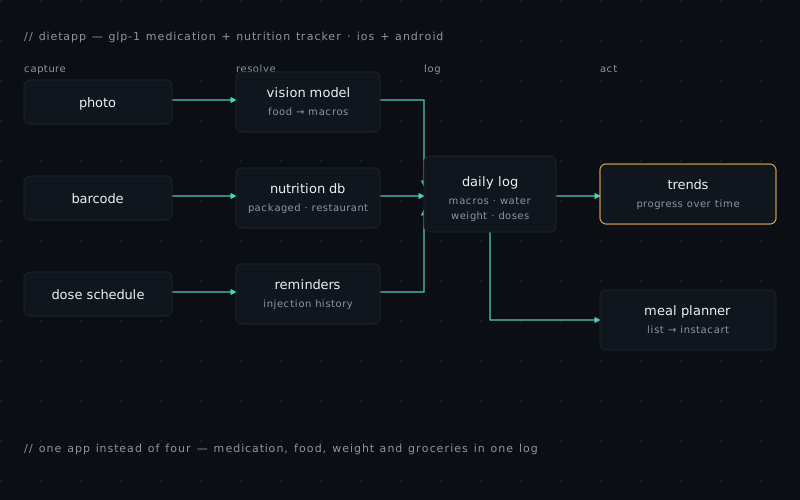
Photographs handle cooked and restaurant meals. Barcodes handle packaged food, where a database lookup is genuinely more accurate than a vision model guessing at a wrapper. The medication schedule contributes doses and injection history.
All three write to one daily record. That unification is what makes the product more than the sum of four apps: protein intake and weight trend and dose timing sit on the same timeline, so they can be read against each other.
Estimates presented as estimates
A vision model looking at a plate is inferring portion size from a flat image. It will be close, and it will sometimes be wrong. Presenting that output as a precise figure would be dishonest, and users discover the imprecision quickly and stop trusting the whole app.
So estimates are adjustable at the point of logging. The model does the tedious work of identifying the food and proposing quantities; the user corrects the portion when they know better. That keeps the speed advantage without overclaiming the accuracy.
Nutrition apps do not fail on data quality. They fail on day nineteen, when logging lunch stops being worth the ninety seconds it takes. Everything here is subordinate to keeping that number near zero.
Close the loop into the kitchen
Tracking tells someone they are short on protein. It does nothing about it. The meal planner suggests meals that fit the day's remaining macros, turns them into a grocery list, and hands that to Instacart — so the app closes the loop from "you need more protein" to food arriving at the door.
Where it landed
DietApp is live on the iOS App Store and Google Play, covering the GLP-1 class and built to extend to GLP-3 medications such as retatrutide as they arrive.
- Photo-based food recognition returning calories, protein, carbs and fat
- Barcode scanning for packaged food and a restaurant nutrition database
- Injection scheduling and dose history alongside the nutrition log
- Weight, macro and hydration trends on a single timeline
- AI meal planner producing grocery lists, with Instacart delivery
- Shipped on both iOS and Android